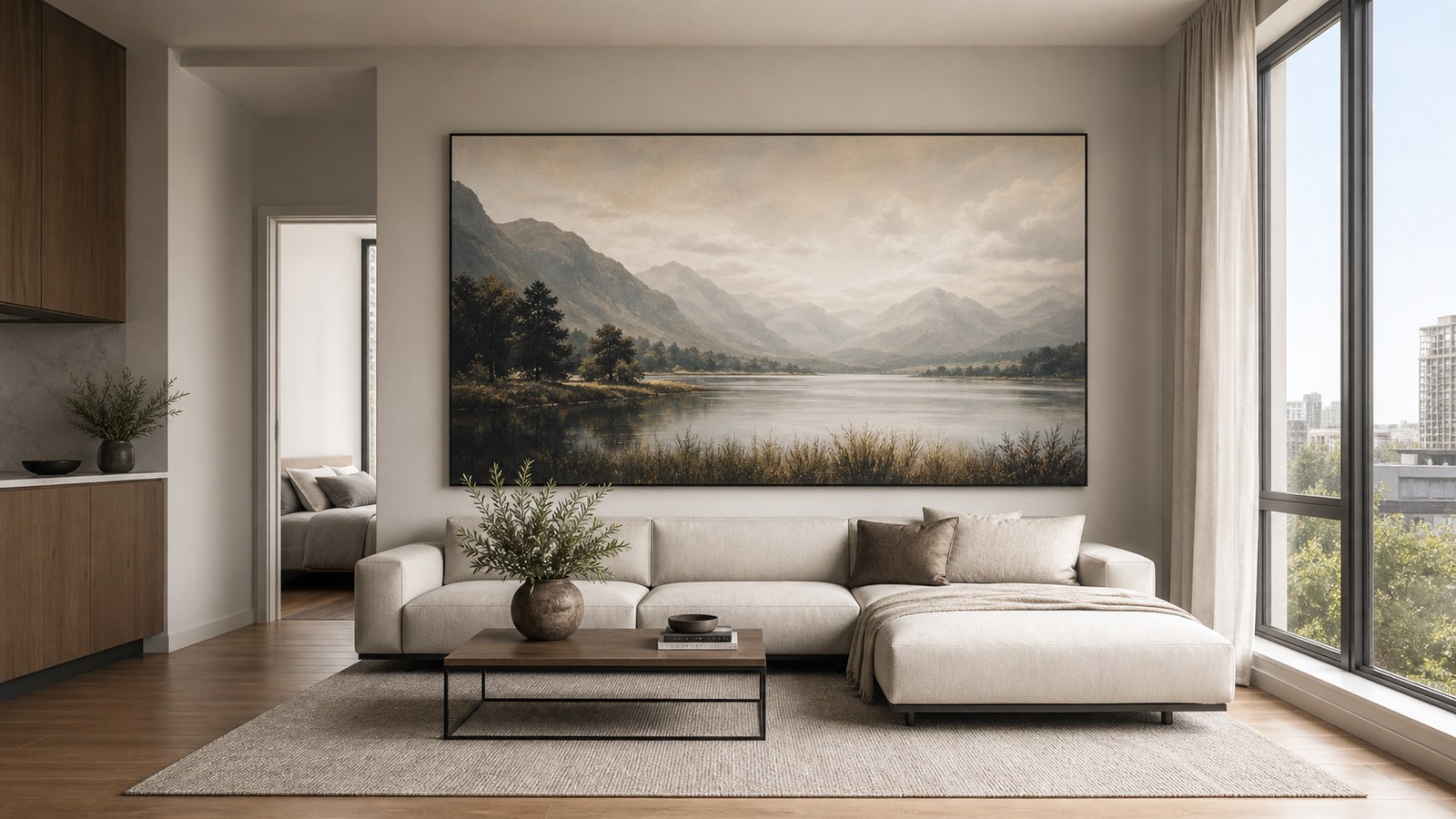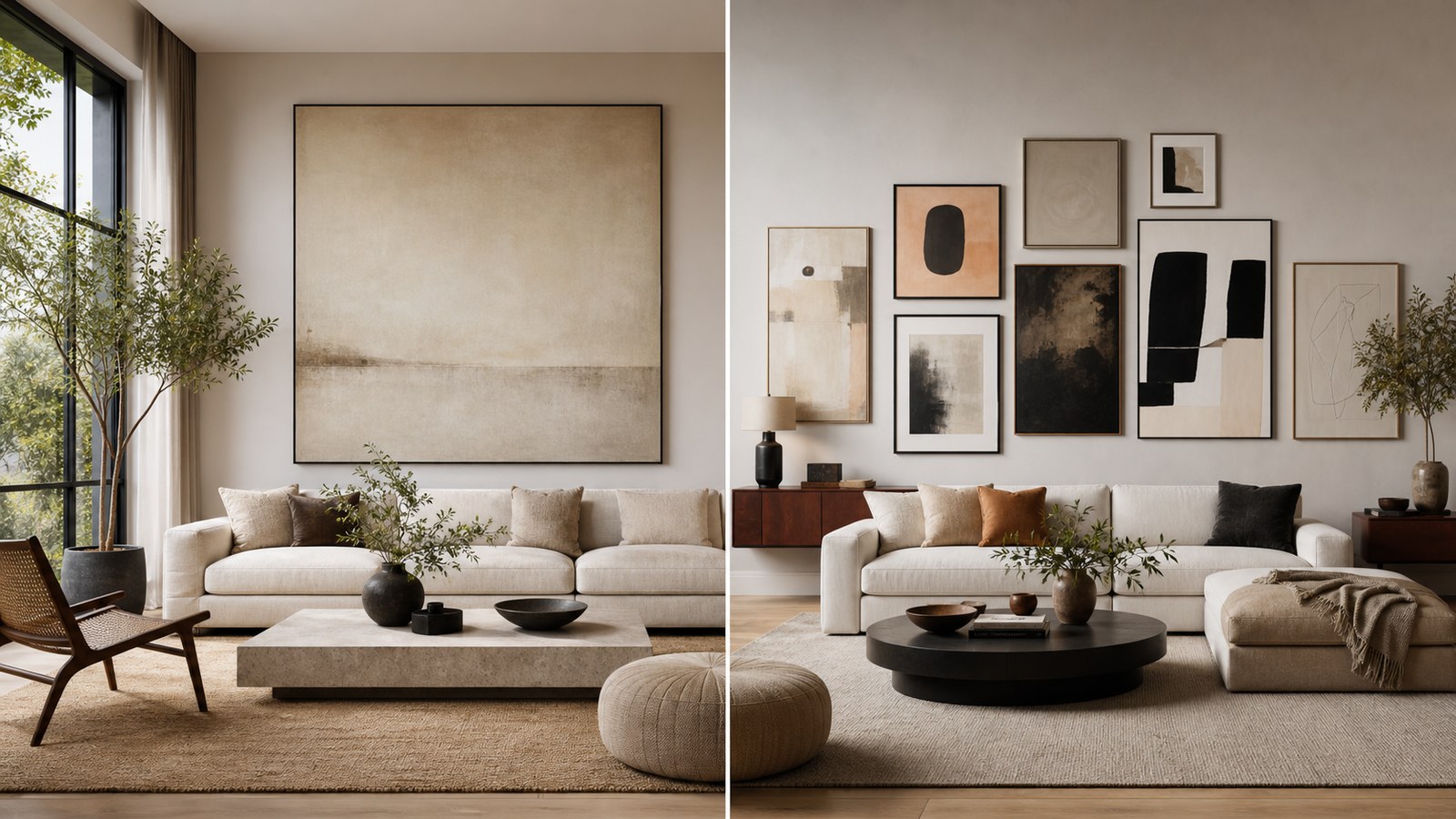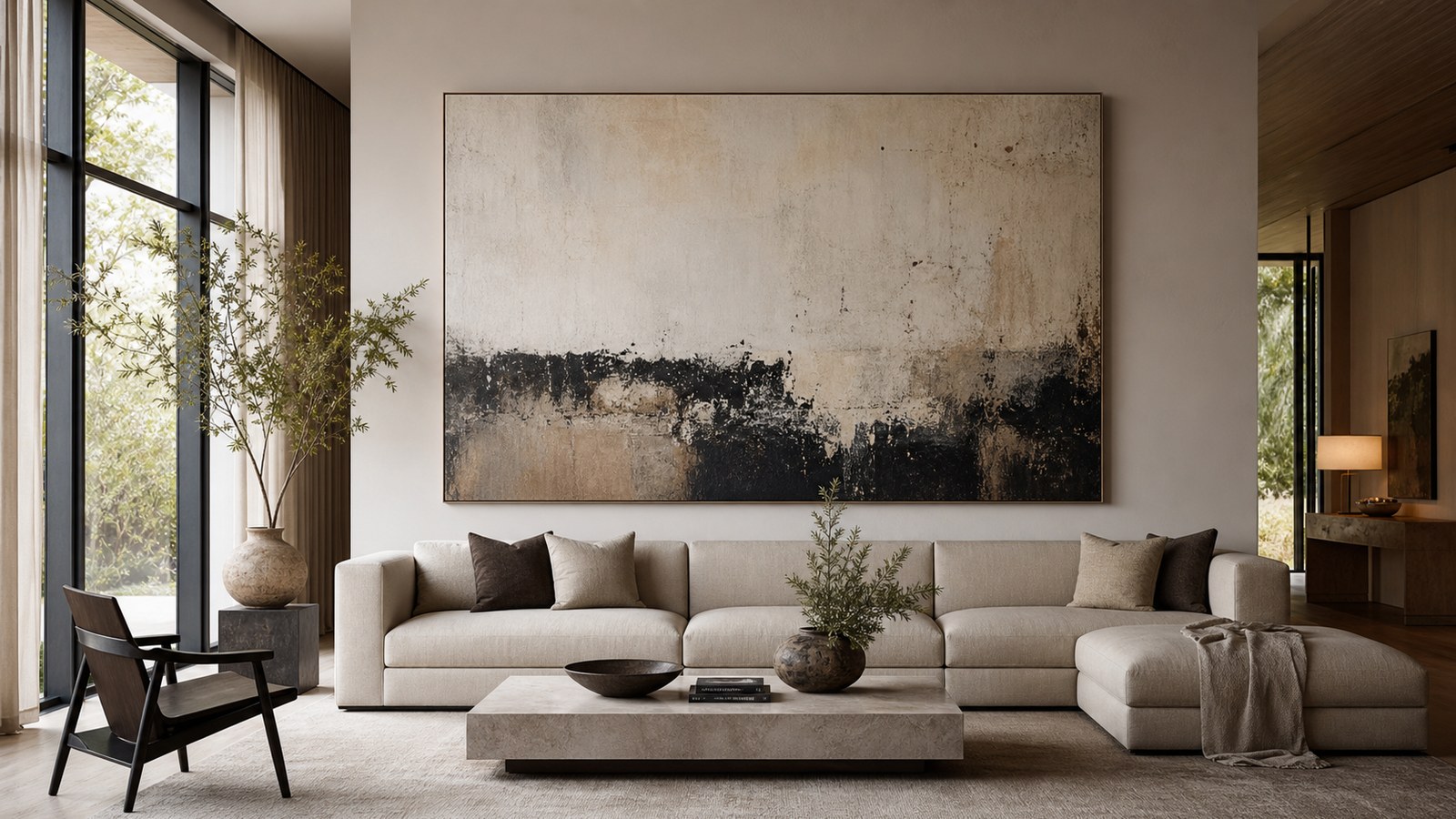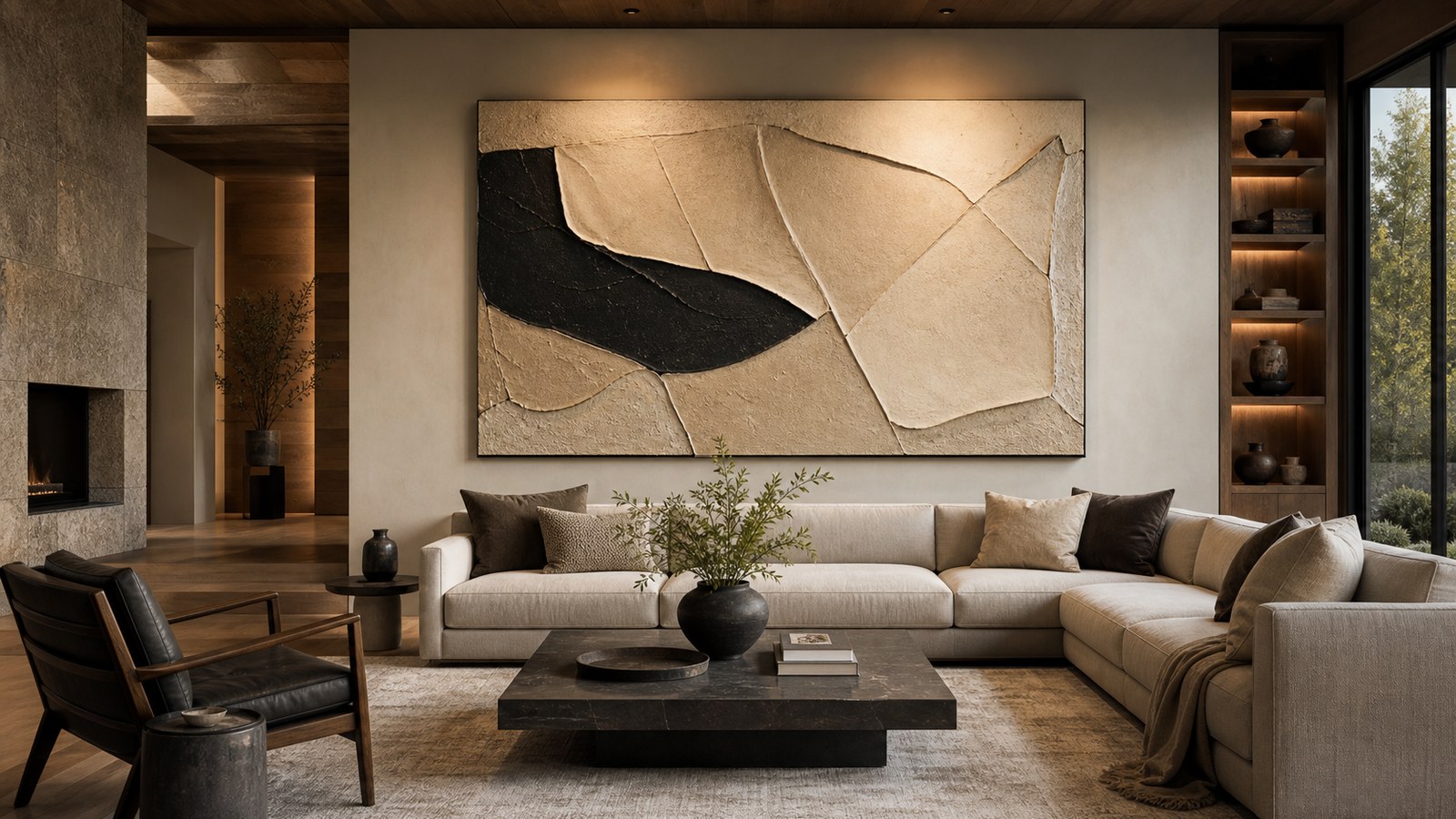
Bold design is often misunderstood as a request for more: more color, more objects, and more visual noise. The stronger approach is usually more selective. Statement Art for Living Rooms: The Ultimate Guide to Choosing a Focal Piece looks at a decision framework for selecting one focal artwork that supports architecture, upholstery, and personality. The goal is not to reproduce a showroom or chase a short-lived trend. It is to understand scale, placement, materials, light, and daily use well enough to make a dramatic element feel inevitable. The guidance ahead is designed for real homes, including compact rooms, imperfect architecture, changing collections, and upholstery that has to remain comfortable. With a measured process, a statement statement can add identity without stealing ease from the setting.
A: A good rule is about two-thirds the width of the sofa or sectional area.
A: It should connect to the palette, but it does not need to match everything exactly.
A: One large piece feels cleaner and more dramatic; a gallery wall feels collected and layered.
A: Center it near eye level, or place it 6–10 inches above furniture when hanging over a sofa.
A: Yes. One bold piece can actually make a small space feel more intentional and finished.
A: Abstract, landscape, black-and-white, or textured pieces all work well with neutral seating.
A: Framed art feels polished; canvas feels relaxed, soft, and often more contemporary.
A: Balance it with simple furniture, open wall space, and a limited accent color palette.
A: Yes, but let the main piece breathe and keep nearby decor smaller or quieter.
A: A large abstract or landscape in colors already found in your room is usually the easiest fit.
What a True Focal Piece Actually Does
Material gives statement art for living rooms an meaningful usable direction. throughout what a true focal piece actually does, smooth finishes sharpen a contemporary scheme, while grain, woven fiber, aged metal, and handmade variation bring warmth. For Statement Art for Living Rooms, the most convincing approach is to let statement art for living rooms support the setting's strongest existing line rather than compete with it. Repeating one nearby material or color can connect statement art for living rooms to the setting; matching every surface would remove the tension that renders what a true focal piece actually does visually interesting.
For statement art for living rooms, visual tension and conflict produce very different results. visual tension renders what a true focal piece actually does readable through dark against pale, curved against straight, or polished against matte. Conflict begins when too many elements compete with statement art for living rooms at the same volume. Choose one leading visual tension for what a true focal piece actually does, then quiet the surrounding details. This hierarchy keeps Statement Art for Living Rooms memorable without making the central living space exhausting.
Choose the Emotional Role Before the Style
For statement art for living rooms, visual tension and conflict produce very different results. visual tension renders choose the emotional role before the style readable through dark against pale, curved against straight, or polished against matte. Conflict begins when too many elements compete with statement art for living rooms at the same volume. Choose one leading visual tension for choose the emotional role before the style, then quiet the surrounding details. This hierarchy keeps Statement Art for Living Rooms memorable without making the central living space exhausting.
Material gives statement art for living rooms an meaningful usable direction. throughout choose the emotional role before the style, smooth finishes sharpen a contemporary scheme, while grain, woven fiber, aged metal, and handmade variation bring warmth. For Statement Art for Living Rooms, look for a version whose silhouette remains coherent from a distance and whose details become rewarding at close range. Repeating one nearby material or color can connect statement art for living rooms to the setting; matching every surface would remove the tension that renders choose the emotional role before the style visually interesting.
Measure for Presence, Not Just Fit
For Statement Art for Living Rooms, measure for presence, not just fit matters because a decision framework for selecting one focal artwork that supports architecture, upholstery, and personality. The eye interprets statement art for living rooms through spatial proportion, visual tension, and open space before it notices small smaller decor. With measure for presence, not just fit, the strongest decision is therefore rarely the loudest. A successful statement art for living rooms option gives the central living space a coherent center while allowing its sofa, windows, walking paths, and familiar objects to remain active parts of the arrangement.
Before committing to statement art for living rooms, shape a temporary version of the arrangement. During measure for presence, not just fit, painter’s tape, paper templates, stacked boxes, or a borrowed form can reveal spatial proportion more honestly than measurements alone. Photograph the statement art for living rooms test in morning and evening light. For Statement Art for Living Rooms, this inexpensive pause exposes height, spacing, or balance problems while measure for presence, not just fit is still easy to revise.
Match Visual Weight to the Furniture
Judge the scale of statement art for living rooms against the largest nearby form, never in isolation. For match visual weight to the upholstery, a substantial sectional, tall ceiling, or broad fireplace can support more visual weight than a compact loveseat on a narrow wall. Leave deliberate breathing room throughout statement art for living rooms. That open area frames match visual weight to the upholstery and prevents even a dramatic version of Statement Art for Living Rooms from making the central living space feel crowded.
Styling statement art for living rooms should anticipate change because daylight shifts, upholstery moves, and personal collections grow. Rather than locking every detail throughout match visual weight to the upholstery, make the main statement art for living rooms decision substantial enough to stand alone and flexible enough to welcome a different lamp, textile, or seasonal branch later. In Statement Art for Living Rooms, the setting remains considered when its priorities are coherent, not when every available surface supports the same idea.
Decide Between Contrast and Continuity
usable details decide whether statement art for living rooms remains convincing after installation. During decide between visual tension and continuity, check clearances, sun exposure, cleaning access, floor protection, and the reach of children or pets where relevant. A thoughtful plan for Statement Art for Living Rooms includes those ordinary realities from the beginning. The primary accent succeeds when decide between visual tension and continuity survives daily life without constant rearranging, special handling, or worry.
Begin decide between visual tension and continuity by observing how this particular central living space is used. When evaluating statement art for living rooms, stand at the entrance, sit in the main chair, and look back from the adjoining area. Each position reveals a different part of decide between visual tension and continuity. A statement art for living rooms statement that looks perfectly scaled in a close photograph may feel abrupt from across the setting. Testing statement art for living rooms in real life connects the result to architecture instead of one styled camera angle.
Judge Materials in Real Room Light
Begin judge materials in real room light by observing how this particular central living space is used. When evaluating statement art for living rooms, stand at the entrance, sit in the main chair, and look back from the adjoining area. Each position reveals a different part of judge materials in real room light. A statement art for living rooms statement that looks perfectly scaled in a close photograph may feel abrupt from across the setting. Testing statement art for living rooms in real life connects the result to architecture instead of one styled camera angle.
usable details decide whether statement art for living rooms remains convincing after installation. During judge materials in real room light, check clearances, sun exposure, cleaning access, floor protection, and the reach of children or pets where relevant. A thoughtful plan for Statement Art for Living Rooms includes those ordinary realities from the beginning. The primary accent succeeds when judge materials in real room light survives daily life without constant rearranging, special handling, or worry.
Buy Original, Limited, or Reproduction Art Wisely
Styling statement art for living rooms should anticipate change because daylight shifts, upholstery moves, and personal collections grow. Rather than locking every detail throughout buy original, limited, or reproduction art wisely, make the main statement art for living rooms decision substantial enough to stand alone and flexible enough to welcome a different lamp, textile, or seasonal branch later. In Statement Art for Living Rooms, the setting remains considered when its priorities are coherent, not when every available surface supports the same idea.
Judge the scale of statement art for living rooms against the largest nearby form, never in isolation. For buy original, limited, or reproduction art wisely, a substantial sectional, tall ceiling, or broad fireplace can support more visual weight than a compact loveseat on a narrow wall. Leave deliberate breathing room throughout statement art for living rooms. That open area frames buy original, limited, or reproduction art wisely and prevents even a dramatic version of Statement Art for Living Rooms from making the central living space feel crowded.
Install the Piece So It Feels Inevitable
Before committing to statement art for living rooms, shape a temporary version of the arrangement. During install the piece so it remains inevitable, painter’s tape, paper templates, stacked boxes, or a borrowed form can reveal spatial proportion more honestly than measurements alone. Photograph the statement art for living rooms test in morning and evening light. For Statement Art for Living Rooms, this inexpensive pause exposes height, spacing, or balance problems while install the piece so it remains inevitable is still easy to revise.
For Statement Art for Living Rooms, install the piece so it remains inevitable matters because a decision framework for selecting one focal artwork that supports architecture, upholstery, and personality. The eye interprets statement art for living rooms through spatial proportion, visual tension, and open space before it notices small smaller decor. With install the piece so it remains inevitable, the strongest decision is therefore rarely the loudest. A successful statement art for living rooms option gives the central living space a coherent center while allowing its sofa, windows, walking paths, and familiar objects to remain active parts of the arrangement.
Live With the Choice Beyond the First Impression
Material gives statement art for living rooms an meaningful usable direction. throughout live with the option beyond the first impression, smooth finishes sharpen a contemporary scheme, while grain, woven fiber, aged metal, and handmade variation bring warmth. For Statement Art for Living Rooms, the option should reinforce a decision framework for selecting one focal artwork that supports architecture, upholstery, and personality while still looking natural beside the objects used every day. Repeating one nearby material or color can connect statement art for living rooms to the setting; matching every surface would remove the tension that renders live with the option beyond the first impression visually interesting.
For statement art for living rooms, visual tension and conflict produce very different results. visual tension renders live with the option beyond the first impression readable through dark against pale, curved against straight, or polished against matte. Conflict begins when too many elements compete with statement art for living rooms at the same volume. Choose one leading visual tension for live with the option beyond the first impression, then quiet the surrounding details. This hierarchy keeps Statement Art for Living Rooms memorable without making the central living space exhausting.
A Statement That Still Feels Like Home
The lasting lesson of Statement Art for Living Rooms: The Ultimate Guide to Choosing a Focal Piece is that impact and comfort do not have to compete. When the decisions are guided by a decision framework for selecting one focal artwork that supports architecture, upholstery, and personality, the result remains expressive but composed. Step back after installation and resist the urge to immediately add more. Notice how the statement changes daylight, sightlines, conversation, and the apparent scale of nearby upholstery. Remove any accessory that now remains redundant, then give the setting time to become familiar. The strongest living rooms reveal personality gradually. They have a coherent point of view, usable ease, and enough open space for the people in them to remain more meaningful than the decoration.