As the long, sun-drenched days of summer begin to fade into crisp, golden afternoons, your home naturally craves a shift in atmosphere. The living room—often the heart of the home—is the perfect place to embrace this seasonal evolution. Transitioning your living room decor from summer to fall isn’t about a complete overhaul. Instead, it’s a thoughtful process of layering warmth, texture, and mood while preserving the lightness that summer leaves behind. Done right, this transition feels effortless yet intentional—inviting comfort without sacrificing style. In this guide, we’ll explore how to seamlessly move from breezy summer aesthetics to the rich, cozy embrace of fall while keeping your living room sophisticated, inviting, and perfectly in tune with the season.
A: Late August through September works well if you begin with subtle color and texture updates.
A: Not at all. Olive, camel, taupe, rust, brown, and muted gold can feel just as seasonal.
A: Change your throw pillows and add a blanket—those two updates make a big difference fast.
A: Use fewer, better pieces and group them in intentional vignettes with breathing room.
A: Yes. Clean-lined furniture looks great with warm textures, natural materials, and layered lighting.
A: Focus on textiles, lighting, and tabletop decor rather than large seasonal furniture changes.
A: Only if the room still feels too summery; heavier or warmer-toned curtains can help a lot.
A: Yes, especially in neutral, velvet, ceramic, or textured finishes that look refined.
A: Rearrange decor, layer blankets, use warm bulbs, and add natural stems or candles.
A: Avoid over-theming the room with too many novelty items that compete with your everyday style.
Understanding the Seasonal Shift
Before diving into decor swaps, it’s important to understand what truly changes between summer and fall. Summer interiors are typically defined by light fabrics, airy palettes, and minimal layering. There’s a sense of openness, brightness, and ease. Fall, on the other hand, introduces depth, warmth, and intimacy. It invites you to slow down, gather, and settle in.
The goal isn’t to erase summer entirely but to gradually introduce fall elements that enhance comfort and visual richness. Think of it as a transition in tone rather than a dramatic transformation. Subtle shifts—like replacing crisp whites with warmer neutrals or introducing deeper accent colors—can completely redefine the mood of your living room.
Start with a Warm Color Evolution
Color is one of the most powerful tools in seasonal decorating. As you move into fall, begin by evolving your color palette rather than replacing it outright. Summer’s bright whites, soft blues, and pale pastels can transition beautifully into warmer hues like terracotta, rust, olive green, mustard, and deep caramel.
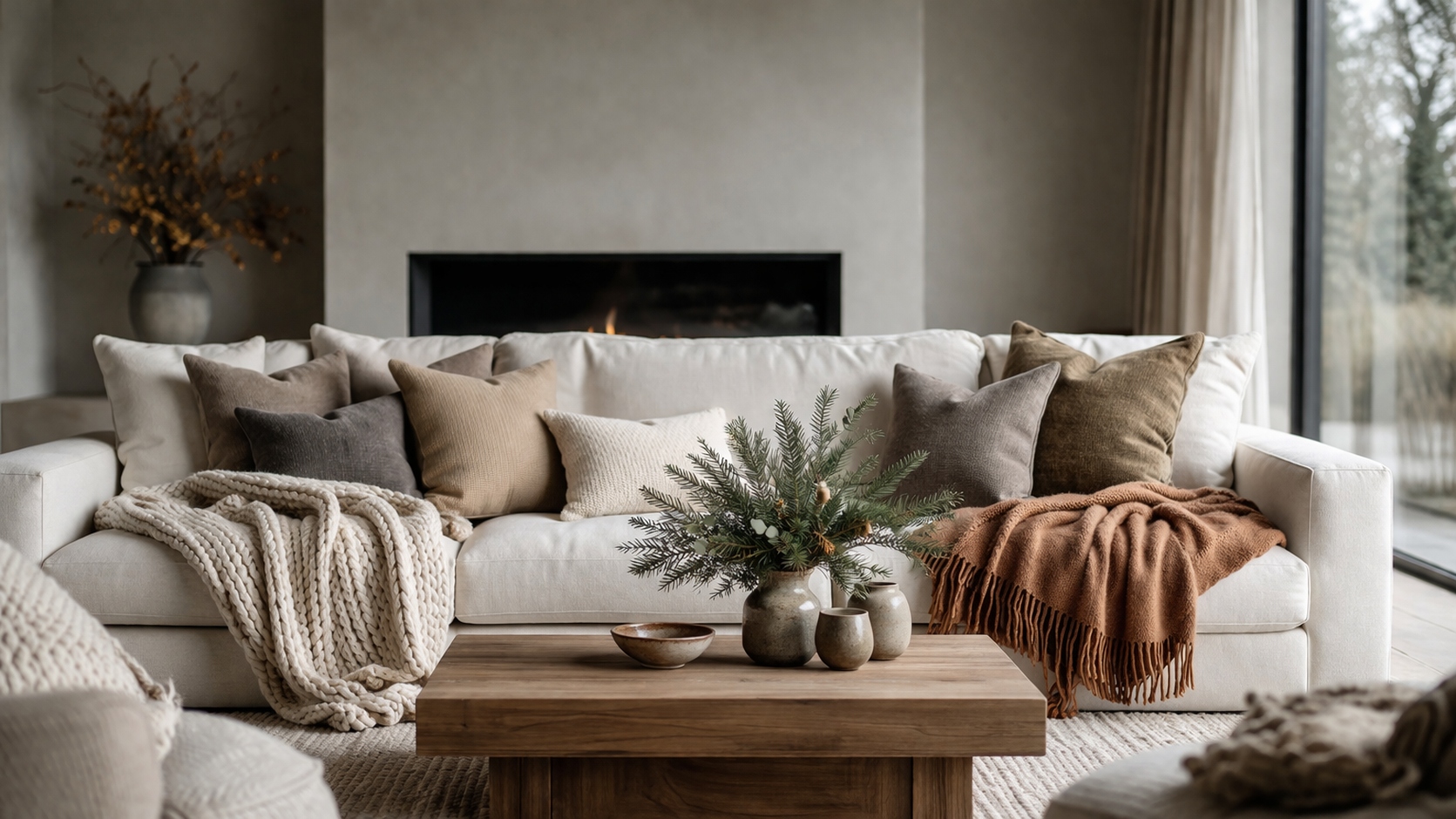
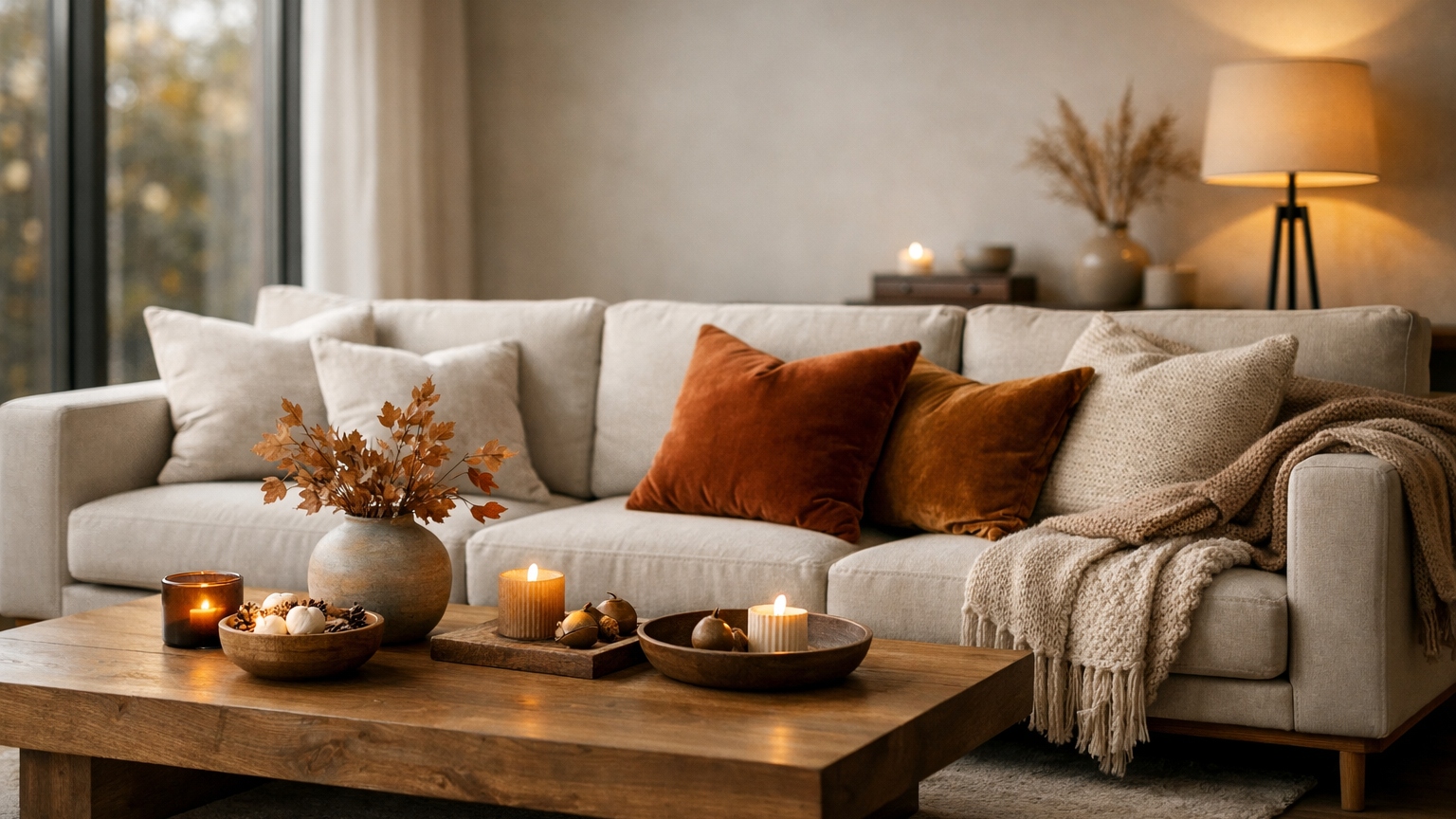
This doesn’t mean painting your walls or buying new furniture. Instead, introduce these tones through accents such as throw pillows, blankets, and decorative objects. A cream sofa can instantly feel autumn-ready with the addition of burnt orange cushions and a textured brown throw. Even small changes—like swapping out light-colored vases for ceramic or amber-toned pieces—can make a noticeable impact.
The key is balance. Keep some of the lighter summer tones to prevent the room from feeling too heavy too quickly. This layered approach ensures your space remains visually dynamic and inviting.
Layer in Cozy Textures
If summer is about simplicity, fall is about layering. Texture becomes essential in creating that signature cozy atmosphere. Start by introducing materials that feel soft, tactile, and inviting. Light cotton throws can be replaced with chunky knit blankets or soft wool options. Linen pillow covers can give way to velvet, boucle, or faux fur textures. Even subtle additions like a woven basket or a textured ceramic vase contribute to the overall depth of the room.
Rugs are another powerful tool in this transition. If your summer setup features a lightweight or flatweave rug, consider layering it with a thicker, plush option or swapping it out entirely for something with more visual weight. This not only adds warmth underfoot but also grounds the space. The beauty of texture is that it enhances comfort without requiring a complete redesign. It’s about making your living room feel as good as it looks.
Adjust Your Lighting for a Softer Glow
Lighting plays a crucial role in setting the seasonal mood. Summer often relies on abundant natural light, with minimal need for artificial illumination. As fall approaches and daylight hours shorten, your lighting strategy should evolve to create a warmer, more intimate ambiance.
Start by incorporating layered lighting. Table lamps, floor lamps, and wall sconces can create pockets of soft illumination that feel cozy and inviting. Opt for warm-toned bulbs rather than cool white ones to mimic the golden hues of fall sunlight.
Candles are another essential element. Whether real or flameless, they add a gentle flicker that instantly transforms the atmosphere. Grouping candles in varying heights on a coffee table or mantel can create a focal point that feels both elegant and seasonal.
The goal is to move away from harsh, overhead lighting and embrace a more nuanced, layered approach that enhances the room’s warmth and comfort.
Introduce Seasonal Natural Elements
One of the easiest and most effective ways to transition your living room is by incorporating natural elements that reflect the season. Summer florals can be replaced with arrangements that feature dried grasses, eucalyptus, or branches with autumn leaves.
Pumpkins, gourds, and pinecones are classic fall accents, but they don’t have to feel cliché. Opt for neutral or muted tones—like white, sage, or soft orange—to keep the look sophisticated. Wooden bowls, stone trays, and ceramic vessels can also bring an organic, grounded feel to the space.
Even something as simple as a bowl of seasonal fruit—like apples or pears—can serve as both decor and a subtle nod to fall. These elements connect your interior to the natural world outside, reinforcing the seasonal transition in a way that feels authentic and effortless.
Swap Out Lightweight Fabrics
Textiles play a significant role in defining the feel of a room. As temperatures drop, it’s time to retire the breezy fabrics of summer and replace them with materials that offer warmth and comfort. Curtains are a great place to start. Sheer panels can be layered with heavier drapes in richer tones, adding both visual depth and insulation. Slipcovers and pillowcases can be updated to reflect the season’s textures and colors. Even small details—like changing out table runners or adding a fabric tray liner—can contribute to the overall transformation. The idea is to create a cohesive look where every textile element supports the transition from light and airy to warm and inviting.
Refresh Your Coffee Table Styling
Your coffee table is a central focal point in the living room, making it the perfect place to showcase your seasonal transition. Start by clearing away summer-themed decor and reimagining the surface with fall-inspired elements.
Layering is key here. Begin with a base, such as a tray or stack of books, and build from there. Add a candle, a small vase with seasonal foliage, and a decorative object in a warm tone. The combination should feel curated but not cluttered.
Consider incorporating materials like wood, metal, and glass to create contrast and interest. A mix of textures and heights will keep the arrangement visually engaging while reinforcing the seasonal theme.
Update Wall Art and Decorative Accents
While large-scale changes aren’t necessary, swapping out a few pieces of wall art or decorative accents can subtly shift the mood of your living room. Summer artwork often features bright colors and coastal or botanical themes. For fall, consider pieces with deeper tones, abstract patterns, or nature-inspired imagery.
Frames in darker finishes—such as walnut or black—can also add a sense of warmth and sophistication. If you prefer not to change artwork entirely, consider rotating in seasonal prints or adding a gallery wall element that reflects autumn hues.
Decorative accents like vases, sculptures, and trays can also be updated to align with the season. Look for pieces that incorporate earthy materials and tones, creating a cohesive and grounded aesthetic.
Embrace a Cozy Seating Arrangement
As the weather cools, your living room should invite relaxation and connection. Rearranging your seating can help create a more intimate and functional space for fall.
Consider pulling furniture slightly closer together to encourage conversation. Add extra throws and pillows to seating areas, making them more inviting. If you have the space, introduce a secondary seating option—like an accent chair or ottoman—to create a cozy nook.
The goal is to make your living room feel like a place where people naturally want to gather, unwind, and spend time together.
Incorporate Subtle Seasonal Scents
Scent is often overlooked in decor, but it plays a powerful role in shaping the atmosphere of a space. Transitioning from summer to fall is the perfect opportunity to introduce fragrances that evoke warmth and comfort.
Look for candles or diffusers with notes of cinnamon, clove, vanilla, amber, or sandalwood. These scents can instantly make your living room feel more seasonal and inviting. Be mindful of balance—opt for subtle, layered fragrances rather than overpowering ones. The goal is to enhance the environment, not overwhelm it.
Maintain a Sense of Simplicity
While fall decor often leans toward richness and layering, it’s important to maintain a sense of simplicity. Overdecorating can make a space feel cluttered and heavy, detracting from the cozy atmosphere you’re trying to create. Focus on a few key changes that have the most impact, and allow negative space to remain. This approach ensures your living room feels curated and intentional rather than crowded. Remember, the best seasonal transitions are those that feel natural and effortless.
Creating a Seamless Seasonal Story
Ultimately, transitioning your living room from summer to fall is about storytelling. Each element—color, texture, lighting, and decor—works together to create a cohesive narrative that reflects the changing season.
By making thoughtful, incremental changes, you can transform your space into a warm, inviting retreat that captures the essence of fall without losing the lightness and elegance of summer. It’s a balance of comfort and style, tradition and modernity.
As the leaves turn and the air grows crisp, your living room becomes more than just a space—it becomes an experience. A place where seasonal beauty meets everyday living, and where every detail contributes to a sense of warmth, connection, and home. Embrace the transition, and let your living room evolve with the season in a way that feels both timeless and uniquely yours.